
As the smart retail industry develops, traditional retail management is gradually becoming more digital, automated, and intelligent. In smart vending, even a simple product transaction involves equipment status, inventory changes, replenishment scheduling, warehousing and delivery, and on-site services. Connecting this fragmented operational information effectively has become an important challenge in improving retail operating efficiency.
JO ANN INTERNATIONAL GROUP INC. (hereinafter referred to as “JA”) is exploring a digital operations framework to support the long-term development of its smart retail business. Through equipment management, inventory monitoring, task allocation, and data analysis, it plans to gradually establish a digital management model linking smart equipment with local operating teams.
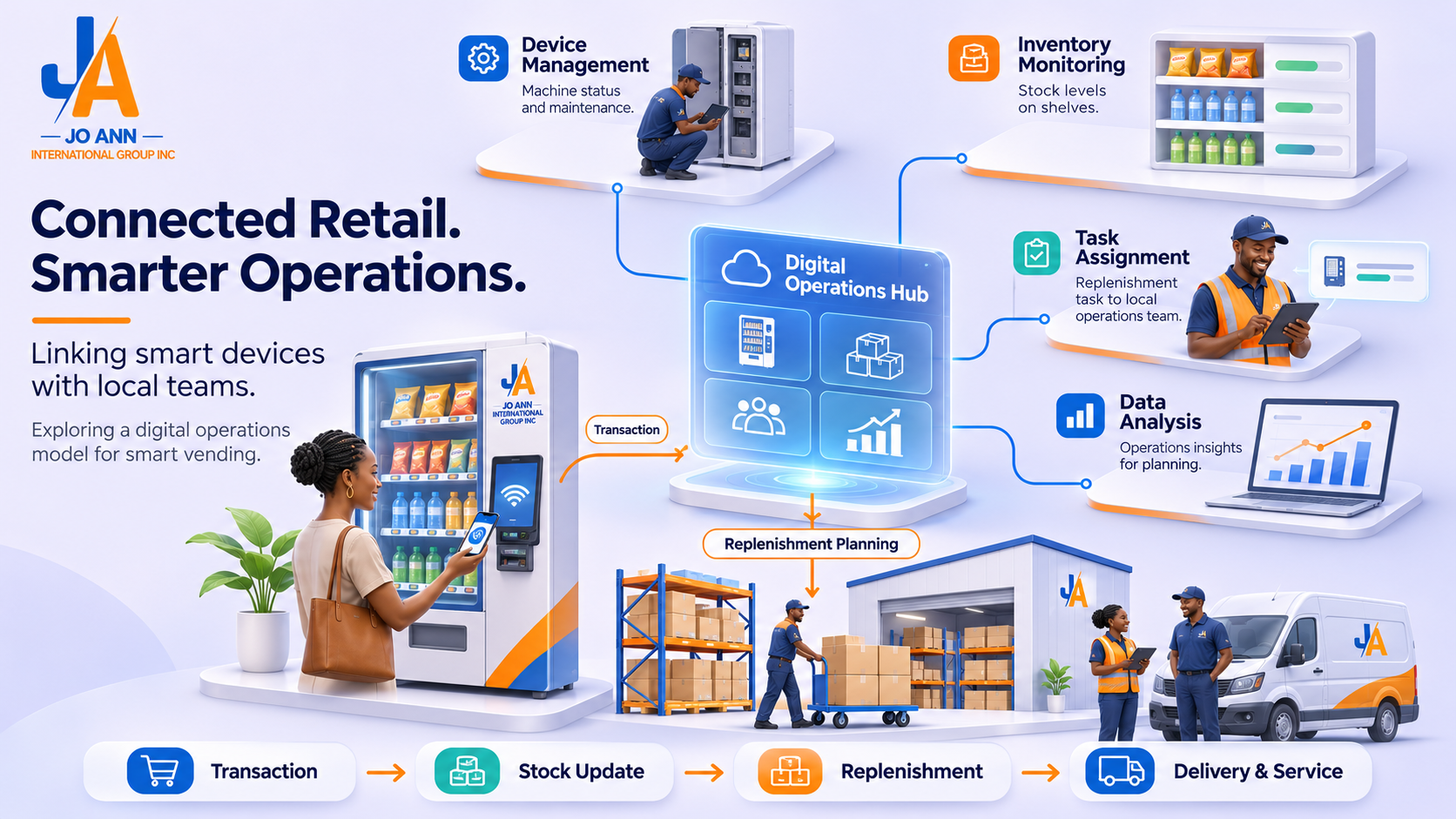
1. Improving Retail Operations Visibility through Digital Equipment Management
In smart retail, equipment provides an important link between consumers and products. Whether equipment functions properly, products sell smoothly, or faults arise directly affects daily business activities.
According to the business plans disclosed on JA’s official website, the company’s digital operations platform will focus on equipment management and operating information, exploring centralized management of equipment details, operating status, sales, and related operational tasks.
By gradually integrating equipment information, operations managers will gain a clearer picture of each unit’s business performance, providing information to support routine inspections, incident handling, and maintenance.
For smart vending equipment distributed across different areas, a unified information management framework can also help improve the efficiency of cross-regional operational coordination.
2. Digitizing Product Management through Inventory Monitoring and Intelligent Replenishment
Product inventory management is a key part of smart retail operations. Insufficient inventory can affect sales, while excess stock can increase storage requirements and tie up capital. Timely insight into product movements is therefore important for continued retail operations.
JA plans to explore combining inventory monitoring with sales data analysis. By recording sales, inventory changes, and replenishment activity, it aims to give operating teams clearer product management information.
Building on this, the company will examine potential applications of artificial intelligence and data analysis in inventory identification, replenishment demand forecasting, and product management.
For example, when stock of a particular product in a machine approaches a preset inventory threshold, the system could, subject to available technical capabilities, issue a replenishment alert. Operations staff would then verify and act on it based on equipment conditions, product demand, and delivery arrangements.
This approach would gradually shift product management from traditional manual recordkeeping toward management supported by data.
3. Establishing Clear Operating Processes through Task Allocation and Progress Tracking
Digital management requires more than collecting information. It must also turn that information into specific tasks.
Different issues in daily smart retail operations require different roles to respond. Low inventory calls for replenishment, equipment faults require technical inspection, and delivery delays need coordination by supply chain personnel.
JA plans to explore task allocation and progress tracking mechanisms that address these practical needs by linking operational issues to the roles responsible for resolving them.
Depending on business needs, future platform functions could gradually include task creation, staff assignment, progress recording, and results reporting.
By clarifying responsibilities, handling procedures, and feedback mechanisms, the company hopes to reduce information gaps across operating functions and make daily work more standardized, transparent, and traceable.
4. Supporting Retail Decisions with Artificial Intelligence and Data Analysis
As business data accumulates, artificial intelligence and data analysis may offer additional support for smart retail operations.
JA regards AI applications as one area to explore in its future digital operations framework, focusing on product sales trends, inventory changes, replenishment needs, and equipment operating data.
Organizing and analyzing this data could help management understand the sales performance of different products, identify inventory trends, and inform product assortments and replenishment schedules.
Data analysis and AI are primarily intended to support decision-making. Actual operations will still need to reflect local market demand, on-site conditions, and the professional judgment of operating personnel.
By combining technology tools with local operating experience, JA hopes to improve management accuracy and the efficiency of operational decisions over time.
5. Connecting Supply Chains and Logistics to Complete the Retail Operating Cycle
Reliable smart retail equipment operations depend on online operations staff and the support of back-end supply chains and logistics systems.
Every stage, from product procurement and warehouse management to transportation and machine replenishment, needs to be effectively connected. Product availability may be disrupted if equipment cannot communicate demand promptly or if the supply chain cannot schedule deliveries accurately.
JA has therefore included supply chain and logistics coordination in the long-term development of its digital operations framework. It plans to explore linking equipment inventory information, product availability, and replenishment tasks with back-end resource planning.
By refining processes for communicating product demand, coordinating warehousing and delivery, and recording replenishment results, the company hopes to establish smoother information flows between retail terminals and the supply chain.
This would improve day-to-day product management and provide an operating foundation for larger-scale deployment of smart vending equipment.
6. Coordinating Systems to Build a Sustainable Digital Operating Model
As smart retail operations expand, data connections among equipment, management systems, and operating functions will become increasingly important.
In developing its digital operations framework, JA will assess system compatibility and coordination capabilities against practical factors such as equipment interfaces, data formats, access permissions, and information update frequency.
While ensuring data security, information accuracy, and sound management practices, the company hopes to gradually connect information on equipment, inventory, staff tasks, and supply chains effectively.
For a future smart retail network, digital management could support daily equipment operations and provide a more systematic information base for regional management, business analysis, and the allocation of operating resources.
7. Supporting Scalable Smart Retail Development through Digital Operations
From managing an individual machine to monitoring inventory across regions and coordinating replenishment tasks with supply chain resources, smart retail development depends on continuously improving digital operating capabilities.
JA will continue exploring technology and business applications in equipment management, inventory monitoring, intelligent replenishment, AI, and supply chain collaboration, gradually refining relevant functions as actual projects progress.
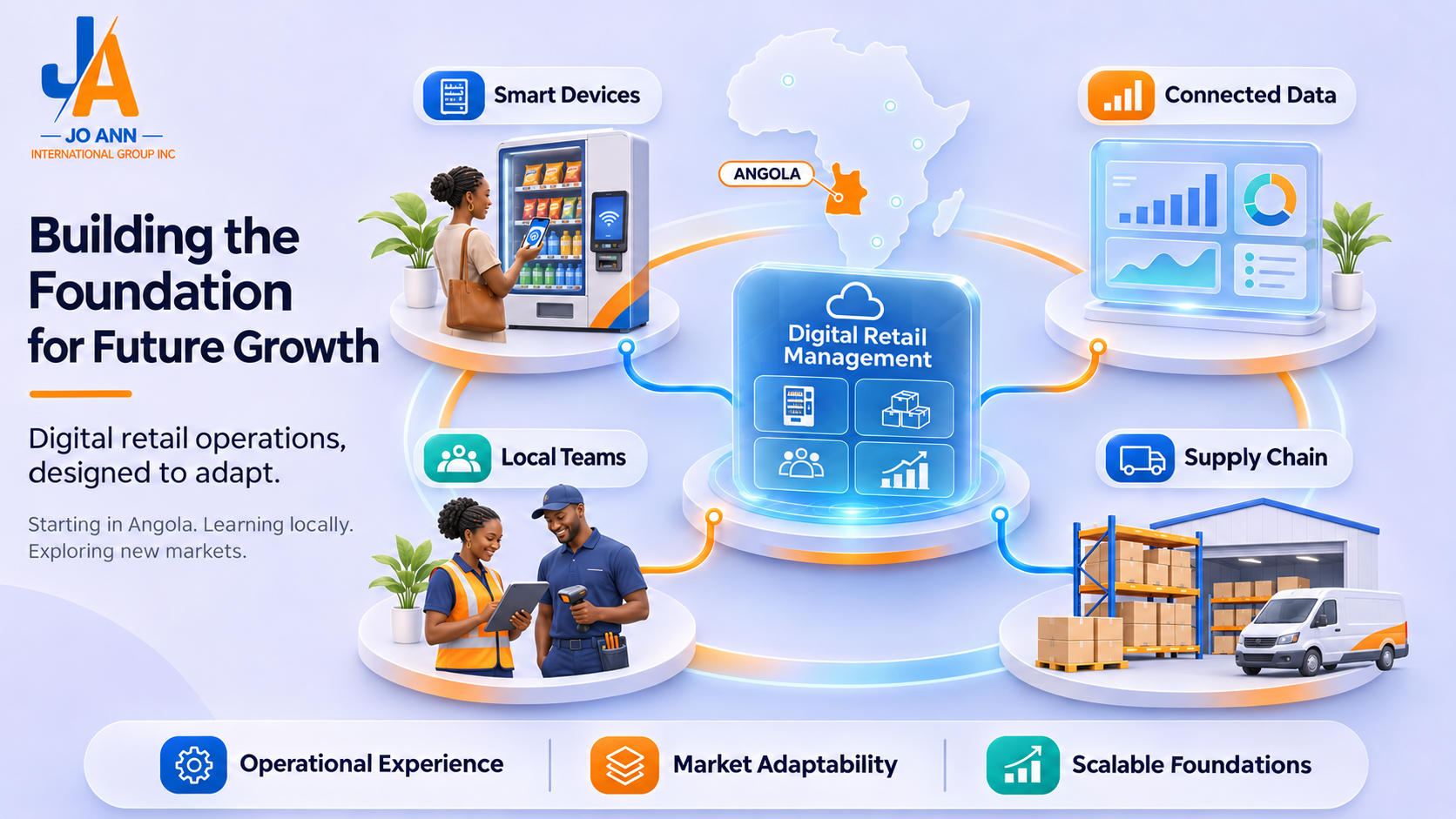
As its business in Angola develops and opportunities in other African markets are assessed, JA hopes to build operating experience and gradually establish a digital retail management model suited to different market environments.
With equipment as its foundation, data as the connecting link, operating teams responsible for execution, and supply chains providing support, JA will continue exploring a digital operations framework for smart retail, laying the groundwork for future growth and operations at scale.
Media Details
JO ANN INTERNATIONAL GROUP INC.


